A PLUCKED ZITHER USED ACROSS THE MIDDLE EAST, NORTH AFRICA AND PARTS OF ASIA; THE INSPECTED REFERENCE IS NINETEENTH-CENTURY TURKISH · MUSIC
Whole qanun study
What it means: Pitch adjustment within a particular instrument tradition; makam is not reduced to a Western scale or a generic symbol of harmony.
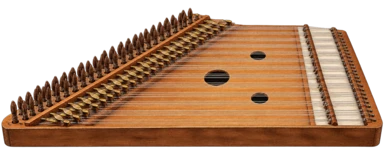
The Met’s nineteenth-century Turkish qanun documents a low trapezoidal plucked zither. Its string courses and pitch-adjusting levers allow close tonal adjustment in makam practice. Instrument configurations vary, so this study retains the visible construction relationships without treating one string total or lever arrangement as universal.
Small adjustments can help me listen more closely.
Often chosen for: Care, gratitude & remembrance
Respectful use: This study depicts the whole externally visible instrument. Triple grouping and left-side pitch adjustment are source-supported, but string totals and lever systems vary; no exact universal count or unseen routing is asserted. The nineteenth-century Turkish reference does not stand for every regional or contemporary qanun. No maker design, inlay, bone or ivory carving, copied rosette, sacred text, score, recording or performance is reproduced. Makam is not reduced to a Western scale or a universal harmony symbol. The illustration is not playable or manufacturing documentation. This is original generated decorative artwork, not an exact site survey, artifact replica or operating guide. Blue and gold are editorial colors. No institutional or community endorsement is claimed. No blanket commercial or manufacturing clearance is claimed.
Sources: [1] metmuseum.org