CROSS-REGIONAL FUNCTIONAL OBJECT; SELECTED REFERENCE PROVENANCE IS STATED SEPARATELY · OBJECTS
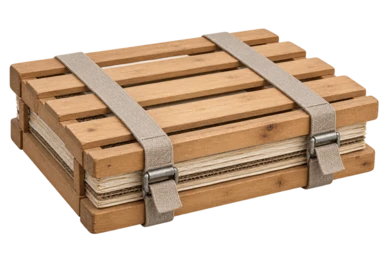
Strapped herbarium plant-press study
What it means: A specimen label retains collection context even when the press is closed. No specimen or label is shown here, and actual plant collecting can require permits and landowner permission. The study connects recording with preservation without claiming a validated device.
Botanical presses flatten and dry specimens between absorbent sheets and ventilating layers. A rigid wooden frame and tightened straps keep the stack together. Labels retain collection context. Kew describes Ghini's sixteenth-century European teaching of pressed collections; this is not evidence that Europeans first preserved plants anywhere, nor that Ghini invented the modern strapped frame.
Careful observation can outlast a season.
Often chosen for: Care, gratitude & remembrance · Curiosity, creativity & wonder
Respectful use: The press is a complete filled-frame object study with paper behind the lattice and two independent straps. Scientific labels and plant material are not depicted. Different technical photographs corroborate components without representing one accession. The European teaching history is not proof of the first plant preservation worldwide or invention of this modern frame. Actual collecting can require permits and landowner permission; no rare-plant location, collecting instruction, hidden buckle mechanism or validated preservation performance is supplied. This is original generated decorative artwork, not an exact site survey, artifact replica or operating guide. Blue and gold are editorial colors. No institutional or community endorsement is claimed. No blanket commercial or manufacturing clearance is claimed.
Sources: [1] brahmsonline.kew.org [2] kew.org [3] floridamuseum.ufl.edu [4] nhmu.utah.edu