CHINA; HISTORICAL LOAD-CARRYING FORM · OBJECTS
Central-wheel Chinese wheelbarrow study
What it means: The Science Museum model is associated with Beijing and has an unknown manufacture date; 1870-4 is its accession number. A separate Powerhouse collection describes side platforms and central wheel protection. Neither model's provenance is assigned to this original illustration or to all Chinese handcarts.
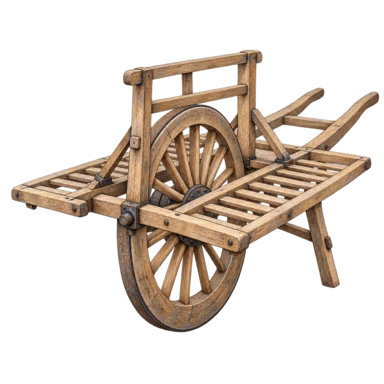
A Chinese wheelbarrow form documented in museum collections places a large wheel beneath the load, with platforms on both sides. Nearly balanced loads reduce the weight carried by the operator's arms. The open wooden structure shows a practical approach to carrying goods that differs from a front-wheel garden barrow. The Science Museum model is associated with Beijing and has an unknown manufacture date; 1870-4 is its accession number. A separate Powerhouse collection describes side platforms and central wheel protection. Neither model's provenance is assigned to this original illustration or to all Chinese handcarts.
A modern reflection on balance and finding a workable way forward.
Often chosen for: Peace, calm & comfort · Strength & courage
Respectful use: Science Museum photograph is CC BY-NC-SA 4.0 and is inspection-only, never a generation input or commercial image asset. Powerhouse text corroboration came from official indexed content after direct retrieval failed. One regional traditional form is not all Chinese wheelbarrows. No exact historical replica, manufacturer design or commercial clearance is claimed. This is an original generated decorative study, not an exact map, site survey, historical artifact replica or operating guide. Blue and gold are editorial colors. No institutional or community endorsement is claimed. No blanket commercial or manufacturing clearance is claimed.
Sources: [1] collection.sciencemuseumgroup.org.uk [2] collection.powerhouse.com.au